


Building a sustainable house in Mallorca typically costs between €1,200 and over €3,000 per m², depending on the finish level, and the major building licence (licencia de obra mayor) can take several months to be granted before work can start. This guide walks through real market prices, permits, sustainable materials, and why the Mediterranean climate makes sustainable building an especially sound investment on the island.
Why building sustainably in Mallorca makes financial sense
Mallorca’s Mediterranean climate favours sustainable building even more than a Central European one: mild winters cut heating demand, while strong summer sun is managed with good insulation and triple-glazed windows. Industry figures show a certified sustainable home can use up to 90% less energy than a conventional one, and energy certification adds a resale premium of roughly 5–8% — a relevant number if you’re building with a future sale or rental in mind.
How much does it cost to build a sustainable house in Mallorca? (price per m²)
| Finish level | Price per m² |
|---|---|
| Basic / economy | €1,200 – 1,600/m² |
| Standard | €1,600 – 2,200/m² |
| High quality | €2,200 – 3,000/m² |
| Premium / luxury | €3,000 – 5,000+/m² |
Market reference range — not EFH’s own price list. All figures are in euros; if you’re budgeting in GBP, build in a buffer for exchange-rate movement between now and completion.
Within each band, the final price depends on specific factors: how easy the plot is to access (a hard-to-reach plot pushes up the cost of moving materials and machinery), the orientation and topography of the land, the architectural complexity of the design, and of course the construction system and finish level you choose. That’s why two similarly sized homes can end up several hundred euros per m² apart.
As an example, a standard 150 m² home can break down roughly as: design and licence ≈ €26,000, foundation and structure ≈ €42,000, roof and envelope ≈ €34,000, interior finishes ≈ €18,500, plus a 10% contingency (≈ €21,500) — a total of around €237,000. This excludes the plot, architect’s fees, municipal taxes and VAT.
At the top end, a premium 250 m² home with high-end finishes can run to around €3,500/m² — roughly €875,000 — with the final figure driven mainly by the materials chosen, home-automation systems and the architectural complexity of the design.
Every project is different — EFH prepares a personalised quote based on your plot, chosen construction system and finish level. Request one via our contact page.
Urban land vs. rústico (rural) land: what you’re actually allowed to build
Before buying a plot or commissioning a design, it’s worth checking its planning classification, since that determines what you can build and under what conditions. On urban land, building is governed by each town hall’s own local plan (site coverage, height, setbacks). On rústico land, Balearic regional rules require much larger plots: the minimum buildable plot is 14,000 m² on land classified as AIA (agricultural interest), AT-H (transition-harmonisation) or SRG (general regime), rising to 50,000 m² on SRG-F (forestry) or ARIP (rural landscape interest) land. Some town halls set the bar even higher — 14,200 m² in Santa María del Camí or 21,000 m² in Santa Eugenia, for instance — so it’s worth checking the local rules for your specific municipality before going further.
Permits explained: prior notification vs. major building licence
Mallorca uses two main routes, depending on the scope of the works:
- Prior notification (comunicación previa) — for simple works (painting, flooring, window replacement without altering openings). Work can start as soon as it’s filed.
- Major building licence (licencia de obra mayor) — for new builds, extensions, structural changes or change of use. Requires a stamped technical project (plans, technical reports and calculations signed by an architect), a detailed cost estimate and, in some cases, additional reports (geotechnical, acoustic, fire safety).
Where the works carry labour-safety risks, the project must also include a Health and Safety Study (Estudio de Seguridad y Salud) setting out the relevant preventive measures, and an additional environmental authorisation may be required in zones with planning restrictions or natural-area protection. The relevant town hall (Ayuntamiento) issues the major licence, and approval can take several months, so it’s worth planning ahead — especially if you’re coordinating the project from abroad. You’ll also need to budget for ICIO (the Spanish construction tax): by law it can be no higher than 4% of the real construction cost, and it’s due as soon as work begins.
How the build actually unfolds, phase by phase
Building a sustainable house in Mallorca follows broadly the same sequence as any build: buying the plot and checking its planning classification, project design, groundworks, foundations, structure and building envelope, installations (electrics, plumbing, climate control), interior finishes, applying for the first-occupation licence, and finally handover. Total duration depends heavily on size and design complexity, which is why EFH sets out a project-specific timeline during the design phase, before the licence application goes in.
Passivhaus and energy efficiency in a Mediterranean climate
The Passivhaus standard sets strict targets: heating and cooling demand ≤ 15 kWh/m²/year, a maximum thermal load of 10 W/m², primary energy use ≤ 120 kWh/m²/year, and airtightness of no more than 0.6 air changes per hour (ACH50), with triple-glazed windows (Uw ≤ 0.8 W/m²K).
Building to this standard adds roughly 8–12% to design costs, plus airtightness testing (€1,000–2,000), technical consultancy (€2,000–5,000) and official certification (€1,000–3,000). Most owners recoup that investment within 3–5 years through lower energy bills, with certified homes using up to 90% less energy than a conventional build.
Sustainable materials: why straw panels make a difference
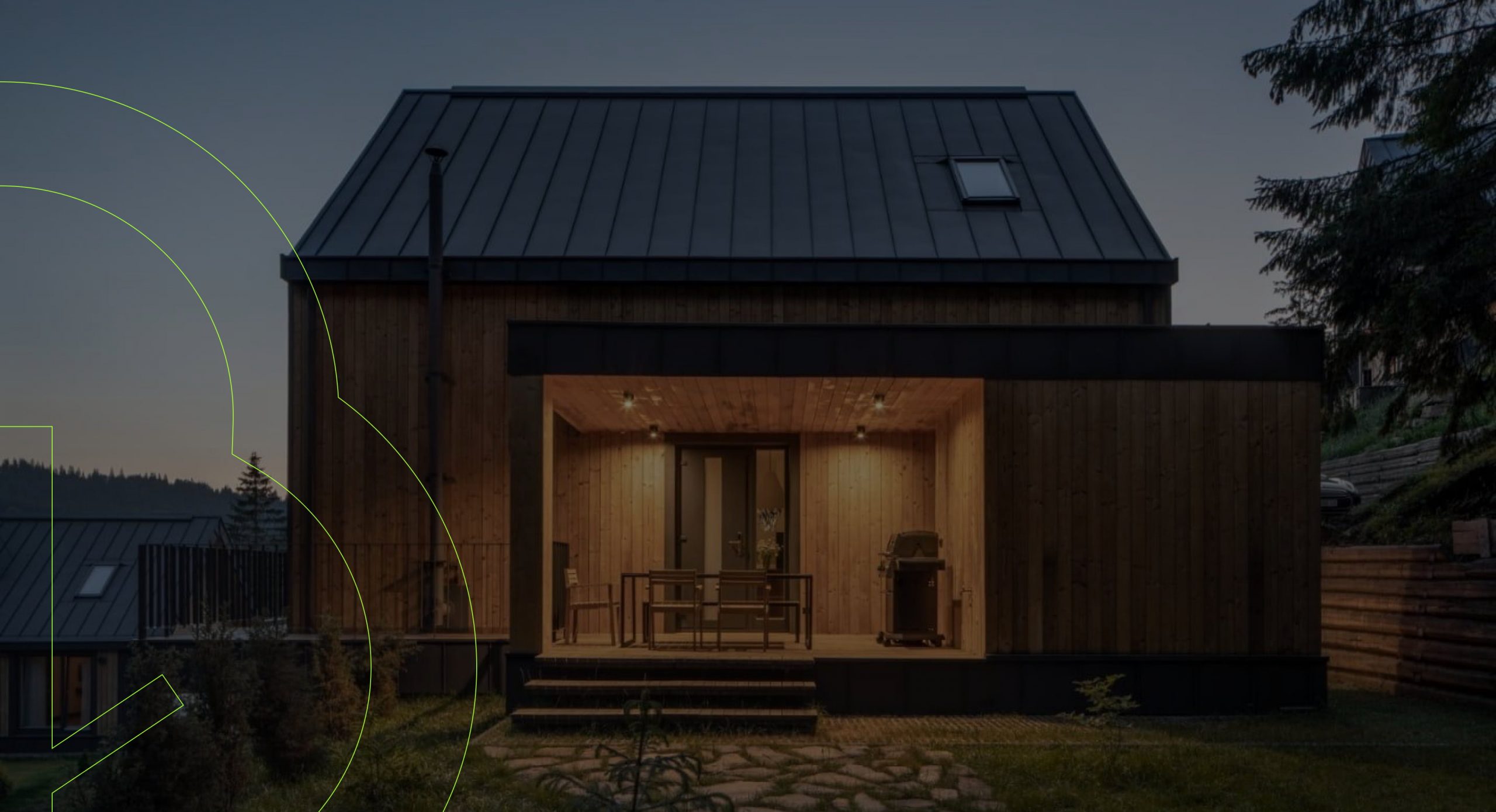
Compressed straw panels — the construction system EFH uses on projects such as the Skogur Eco Village — deliver stronger thermal and acoustic insulation than conventional systems, good moisture regulation (which lowers mould risk), fire resistance, and a service life of over 120 years, while keeping indoor air quality healthier as a natural, non-toxic material. Industry data suggests compressed straw’s thermal capacity can run up to three times higher than conventional insulation, translating into energy-loss reductions of over 50% compared with traditional building systems. Full technical detail is on EFH’s materials page.
Real EFH projects in Mallorca
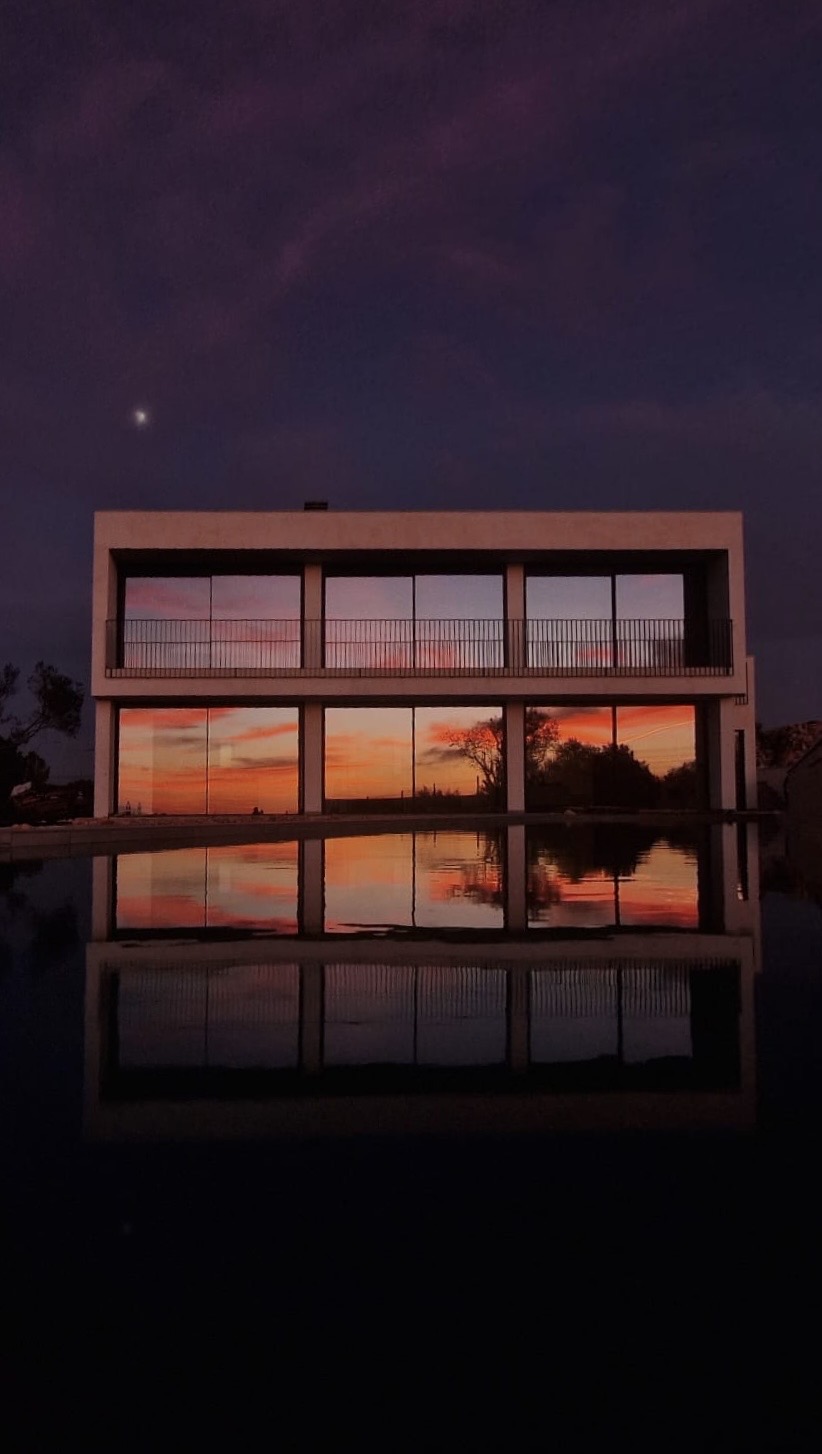
EFH has completed a number of sustainable residential projects on the island — including Edén, Gaspar de Bennazar and Son Gual — alongside the Skogur Eco Village, a residential project built with straw panels. You can browse the full portfolio, with photos and details, on our completed projects page.
Checklist: steps to building your sustainable house in Mallorca
- Check the plot’s planning classification (urban land vs. rural/rústico land) before buying or designing.
- Commission an architect’s project, aligned with current Spanish building code (CTE).
- File for the major building licence with the relevant town hall, and allow several months for approval.
- Choose your sustainable construction system (straw panels, upgraded insulation, high-performance glazing).
- Build with continuous technical supervision.
- Obtain the final energy certificate and, where relevant, Passivhaus certification.
Frequently asked questions
How long does a major building licence take in Mallorca?
Approval can take several months, depending on the town hall’s workload. Minor works filed as prior notification, by contrast, can start as soon as they’re submitted.
Is a Passivhaus more expensive to build?
Design costs run roughly 8–12% higher, but most owners recoup that within 3–5 years through lower energy bills.
What is ICIO and how much will I pay?
It’s the Spanish tax on construction, installations and works. By law it can’t exceed 4% of the real construction cost, and it’s due once work starts.
Can I build on any plot in Mallorca?
No — it depends on the planning classification. Urban land follows the local town plan; on rústico land, the minimum buildable plot is 14,000 m² or 50,000 m² depending on classification, and can be higher still depending on the municipality.
Want to know what your project would cost? Request a personalised consultation with EFH via our contact page.
